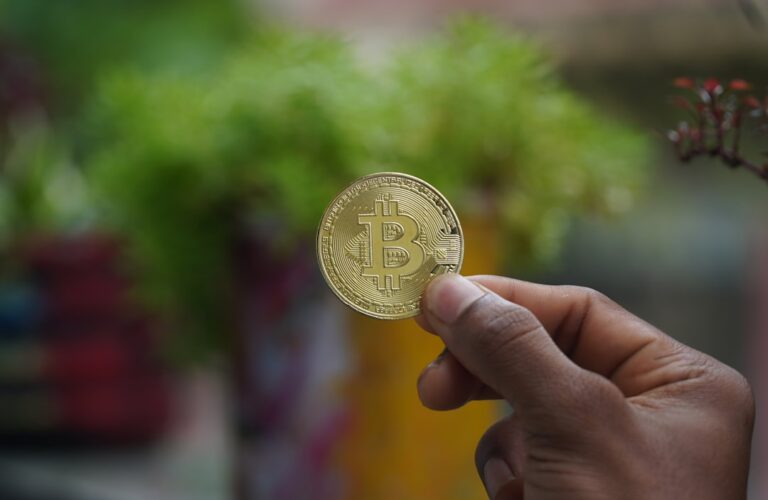
Can Quantum Computers Break Bitcoin? Google Says Far Fewer Qubits Are Needed Than We Thought

Here’s the uncomfortable truth nobody in crypto wants to hear: breaking Bitcoin’s encryption might need fewer than 500,000 physical qubits. Google’s Quantum AI team published a whitepaper this week that slashed prior estimates by roughly 20x. Meanwhile, a startup called Postquant Labs just launched the first quantum-classical blockchain testnet where researchers can actually mine blockchain tasks on real quantum hardware. The question isn’t whether quantum computing will reshape blockchain — it’s whether the industry can adapt fast enough before the threat becomes real.
Google’s Quantum Bombshell: What the Paper Actually Says
Google’s researchers designed two potential attack methods against Bitcoin’s cryptographic defenses. Each required roughly 1,200 to 1,450 high-quality qubits — a fraction of earlier estimates that cited “millions” as necessary. That gap matters more than most people realize.
The paper specifically flagged Bitcoin’s Taproot upgrade as an accelerant. Taproot, which was celebrated in 2021 for making transactions more efficient and private, apparently has a side effect nobody warned about: it exposes public keys in a way that makes real-time quantum attacks more feasible. When someone sends Bitcoin, the public key is briefly revealed. A fast enough quantum computer could theoretically calculate the private key from that exposure and redirect funds before the transaction confirms.
Let that sink in. The upgrade everyone celebrated for improving Bitcoin’s privacy may have simultaneously weakened its quantum resistance.
Google has previously pointed to 2029 as a potential milestone for useful quantum systems, urging developers to begin post-quantum migration before that date. With this paper, the timeline just got more urgent.
The Counter-Movement: Building With Quantum, Not Against It
While most blockchain developers are panicking about quantum threats, Postquant Labs took the opposite approach. Their testnet, built in collaboration with D-Wave Quantum Inc, lets researchers earn QUIP tokens by solving complex mathematical problems using quantum machines, GPUs, or regular CPUs working side by side.

The numbers are encouraging: 13,000 sign-ups from researchers at MIT, Stanford, and universities worldwide. Six teams have already submitted computational work. The hybrid design allows participants to contribute using QPUs (quantum processing units), CPUs, and GPUs — essentially creating a sandbox to test whether quantum hardware can actually outperform classical computing on blockchain-specific tasks.
“Annealing quantum computers are starting to show performance advantages on useful optimization applications across logistics, manufacturing, and beyond,” said Colton Dillion, CEO and co-founder of Postquant Labs. “Our goal is to make this quantum advantage accessible across a blockchain network.”
The Race Between Threat and Defense
What we’re witnessing is a genuine technological arms race playing out in real time. On one side: quantum hardware advancing faster than anyone predicted. On the other: the crypto industry scrambling to implement post-quantum cryptography.
Bitcoin, Ethereum, and other major networks are now diverging on their post-quantum strategies. Some are exploring lattice-based cryptography. Others are looking at hash-based signatures. The problem? None of these solutions have been battle-tested at scale on a live blockchain.
Here’s what most analysts miss: the threat isn’t binary. It’s not “quantum computers exist, therefore Bitcoin is dead.” The real risk is a gradual erosion of confidence. If quantum capabilities keep advancing while blockchain defenses lag, institutional money will start hedging. We’ve already seen the bitcoin treasury strategy unwind accelerate this quarter — quantum fears could amplify that trend.
What Should Crypto Holders Do Right Now?
Actionable steps for April 2026:
- Audit your wallet exposure. If you’re holding Bitcoin in addresses where the public key has already been revealed (old P2PKH addresses, reused addresses), move funds to fresh SegWit or Lightning addresses.
- Watch the Taproot debate closely. If the community begins discussing Taproot rollbacks or modifications, that’s a signal the threat is being taken seriously.
- Diversify into post-quantum projects. Chains like QRL (Quantum Resistant Ledger) and Algorand’s post-quantum initiatives deserve attention — they’re building defenses now, not after a crisis.
- Don’t panic sell. Google’s 2029 timeline still holds for functional quantum systems. You have time, but don’t have forever.
The Bigger Picture: Quantum-Enhanced Blockchain
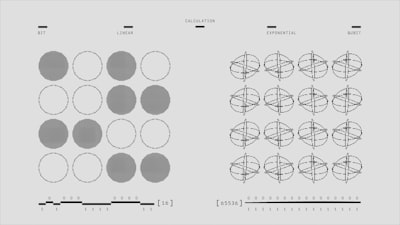
Postquant Labs’ testnet represents something more nuanced than simple threat mitigation. If quantum computers can outperform classical machines on blockchain consensus mechanisms — solving problems faster, using less energy, delivering better results — then distributed ledger technology becomes dramatically more useful for enterprise applications beyond crypto trading.
Think about it: optimization problems in supply chain management, real-time risk modeling for volatile commodity markets, or complex multi-party computation for institutional settlement — all of these could theoretically benefit from quantum-accelerated blockchain processing.
The testnet is still experimental. Mainnet launch depends entirely on proving real-world quantum advantage exists. But the fact that D-Wave — a publicly traded quantum computing company — is actively collaborating signals that this isn’t vaporware.
My Take
Most people will read Google’s paper and either panic or dismiss it. Both reactions are wrong. The paper is a gift — a concrete timeline with specific numbers that gives the industry something to work with. Before this, quantum threat was abstract. Now it’s engineering.
The startups and protocols that take this seriously today — not in 2028 — will define the next era of blockchain. The ones that ignore it will become cautionary tales. Postquant Labs is gambling that quantum will enhance blockchain rather than destroy it. It’s a bet worth watching.
For now, the smartest move is education. Understand what Taproot exposed. Follow the post-quantum migration timelines. And keep your long-term thesis flexible — because the crypto landscape of 2029 might look nothing like today.
Sources: CoinDesk | CoinDesk (Google Paper) | Google Quantum AI