Do Robotaxis Need Human Drivers? Why 7 AV Companies Refused to Answer in 2026
Here’s a question that should keep anyone who rides in a self-driving car up at night: how often does a human actually have to step in? We asked. Seven major autonomous vehicle companies were asked by a United States senator. Every single one of them dodged the question. Every. Single. One.
The Robotaxi Transparency Problem Nobody Wants to Talk About
In February 2026, Senator Ed Markey sent letters to Aurora, May Mobility, Motional, Nuro, Tesla, Waymo, and Zoox. Fourteen questions each. The most important one was simple: how often do your remote assistance operators intervene?
The results, released this week, read like a masterclass in corporate evasion. Waymo and May Mobility called it “confidential business information.” Tesla didn’t even include the question in its response. Aurora and May Mobility said they appreciated the conversation — then offered nothing concrete.
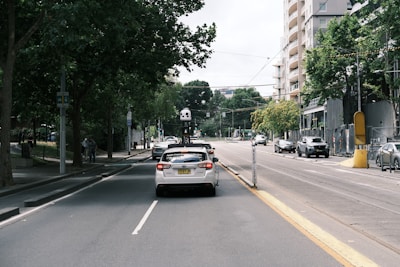
This isn’t some academic curiosity. These companies are operating commercially on public roads right now. People are getting in these cars. And the companies refuse to tell us how often those cars need a human thousands of miles away to bail them out.
Remote Assistance Operators: The Hidden Workforce Behind Autonomous Driving
Let’s talk about the elephant in the room. The promise of robotaxis was always about removing the human driver. Lower costs, 24/7 availability, no labor disputes. But here’s what the industry hasn’t been shouting from the rooftops: there’s still a human in the loop.
These humans are called “remote assistance operators.” They sit in call-center-like environments — some in the US, some overseas — watching screens, waiting for an autonomous vehicle to send a distress signal. When a Waymo gets confused at a construction zone, when a May Mobility car encounters an unusual intersection, someone gets pinged.
Waymo revealed something startling during a Senate Commerce Committee hearing: about half of its remote assistance staff is based in the Philippines. Markey’s office flagged this immediately, noting that a foreign driver’s license is “not a substitute for passing a U.S. driver’s license exam, as the rules of the road will almost certainly vary by location.”
What Tesla Admitted That Nobody Else Would
In a twist that surprised exactly nobody who follows this space, Tesla was the most forthcoming — and the most alarming. While every other company said their remote workers either can’t or don’t directly control the vehicle, Tesla admitted its operators can take direct control.
There are limits: the car must be moving at 2 mph or less, and the remote operator can’t exceed 10 mph. Tesla frames this as a safety feature for repositioning stuck vehicles. Critics see it differently. If a remote worker in a call center can steer your car, even at walking speed, the boundary between “autonomous” and “remotely driven” gets very blurry.
Why Robotaxi Companies Are Betting on Secrecy
The secrecy strategy makes business sense even if it erodes public trust. These companies are burning billions on autonomous driving technology. Admitting that their vehicles frequently need human help undermines the entire pitch. If investors learn that a Waymo ride requires a remote operator 15% of the time (a hypothetical — they won’t tell us), the unit economics collapse.
Waymo did offer one crumb: it claims improvements have “materially reduced” the number of help requests per mile. It also says a “vast majority” of requests are resolved by the self-driving system before a remote agent even responds. That’s reassuring language. It’s also completely unverifiable.
This pattern of corporate opacity isn’t unique to autonomous vehicles. We’ve seen the same playbook from social media companies on content moderation, from AI labs on government surveillance apps, and from tech giants that fire thousands via email while claiming AI makes them unnecessary. The pattern is always the same: deploy first, answer questions later — or never.
What This Means for Robotaxi Riders in 2026
If you ride in a robotaxi today, you’re essentially trusting a company that refuses to tell you how often its product fails. That’s not hyperbole. Markey’s investigation asked fourteen specific questions about safety protocols, operator qualifications, response times, and geographic staffing. The answers were a patchwork of deflection.
May Mobility reported the longest worst-case latency at 500 milliseconds. That’s half a second. In a highway scenario at 60 mph, that’s 44 feet of uncontrolled travel. Each company has different fatigue protocols, different data security measures, different qualification standards for the humans they rely on.
There are no federal standards governing any of this. Markey is now calling on NHTSA to investigate and working on legislation to impose “strict guardrails.” But legislation moves at the speed of Congress, while autonomous vehicles are deploying at the speed of venture capital.
The Bottom Line: Robotaxi Transparency Is a Consumer Safety Issue
The autonomous vehicle industry wants to sell you a future where cars drive themselves. That future might arrive eventually. But right now, the present looks more like this: cars that mostly drive themselves, backed by remote humans the companies won’t tell you about, operating under regulations that don’t exist yet.
If you’re using robotaxi services today, ask yourself: do you know how often someone has to remotely save your ride? Neither does anyone else. And that’s exactly how these companies want it.
Sources: TechCrunch | Senator Markey’s Office