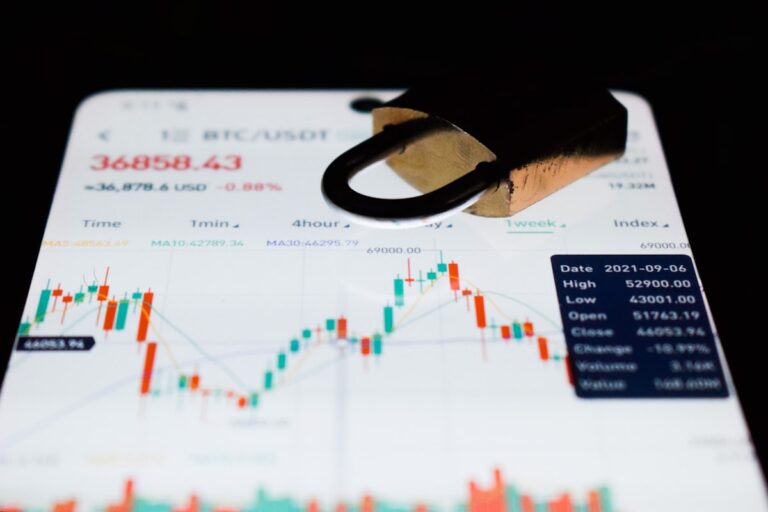

Should Taiwan Add Bitcoin to National Reserves? War Risk Makes the Case Urgent in April 2026
As oil prices spike and Iran tensions dominate headlines, a quieter story from Taipei could reshape how nations think about strategic reserves forever. The Bitcoin Policy Institute just published a paper arguing that Taiwan should reconsider Bitcoin as a reserve asset — not for speculative gains, but as wartime insurance. And honestly? The argument is harder to dismiss than you might think.
Why Taiwan Bitcoin Reserve Talk Matters Right Now
The timing is not accidental. With Trump threatening to hit Iran “extremely hard” and oil briefly dipping below $100 before spiking again, the world is getting a live demonstration of how quickly geopolitical risk can upend financial assumptions. Taiwan watches this closely. It has to.
Jacob Langenkamp, a research fellow at the Bitcoin Policy Institute, laid out the core thesis on Tuesday: if China ever pursues reunification through a blockade or full invasion, Bitcoin would be the only major reserve asset that remains fully accessible. Gold can be seized or stranded. USD reserves face potential restrictions through sanctions or SWIFT-like cutoffs. Bitcoin? It moves on a network no single government controls.
That is a genuinely novel argument. Most Bitcoin reserve debates revolve around inflation hedging or portfolio diversification — financial logic. Langenkamp is making a survival logic case. And for Taiwan specifically, the survival scenario is not hypothetical. It is the central planning assumption of every military in the Pacific.
The USD Debasement Risk Taiwan Cannot Ignore
Here is where it gets uncomfortable. Taiwan’s central bank holds at least 80% of its reserves in USD-denominated assets. Most of its trade is dollar-denominated too. That concentration made sense during decades of American stability. It makes considerably less sense when US debt is ballooning, the Fed is expanding money supply, and a potential AI market correction could accelerate dollar weakness.
Langenkamp identifies four specific debasement accelerators: growing US debt, Federal Reserve monetary expansion, a potential AI-driven market downturn, and declining semiconductor revenues. Taiwan is exposed to every single one of these. The semiconductor angle is particularly sharp — if AI spending slows, Taiwan’s biggest export engine weakens, and the dollar’s purchasing power simultaneously erodes.
Bitcoin, the paper argues, can couple with gold to offer a hedge. Not a replacement. A complement. And critically, it can be adopted before other nations pile in, giving Taiwan a first-mover advantage on price appreciation.
Taiwan Already Holds 210 Bitcoin
This is the detail most people miss. Taiwan’s Ministry of Justice already holds 210 Bitcoin, worth roughly $14 million, confiscated during criminal investigations. Taiwanese lawmaker Ko Ju-Chun revealed this on X last year.
It is not a strategic reserve. It is seized contraband. But it means Taiwan has existing custody infrastructure and institutional familiarity with the asset class. The distance between “we hold confiscated Bitcoin” and “we intentionally hold Bitcoin as a reserve” is shorter than starting from zero.
If those 210 BTC were recognized as part of national reserves, Taiwan would rank seventh among national Bitcoin holders globally — behind El Salvador but ahead of Finland. That is not a trivial position.
The Case Against: Volatility, Liquidity, and Custody
Taiwan’s central bank examined this idea last year and rejected it in December. Their objections are real: volatility, liquidity constraints, and custody risk. These are not trivial concerns for a central bank managing hundreds of billions in reserves.
Langenkamp acknowledges the concerns but calls them “addressable with institutional expertise.” He is right on custody — firms like Fidelity and Coinbase already offer institutional-grade solutions. He is partially right on volatility — Bitcoin’s drawdowns have been less dramatic each cycle, and a long-term reserve position does not need daily stability.
Liquidity is the weakest part of the argument. For a country potentially needing to move billions quickly during a crisis, Bitcoin’s market depth still lags behind gold and treasuries. But then again, if you are under blockade, liquidity of any traditional asset is the least of your problems. That is precisely Langenkamp’s point.
What This Means for Bitcoin Price and Global Adoption
Nation-state adoption is the demand shock Bitcoin maximalists have predicted for years. It has not happened at scale yet. El Salvador holds roughly 6,000 BTC. Bhutan mines it. A few others nibble. But no major economy has committed.
Taiwan would change that calculus. It is a G20-adjacent economy with globally significant reserves. If Taipei even signals serious intent — say, converting its 210 BTC from seized assets to strategic reserves — the market reaction would be immediate and outsized.
More importantly, it would create a domino effect. If Taiwan demonstrates that Bitcoin functions as wartime insurance, every nation with territorial vulnerabilities starts asking the same question. South Korea. Japan. The Baltic states. Even European NATO members facing potential Russian escalation.
What Investors Should Watch in April 2026
Three things to monitor:
1. Taiwan Central Bank signals. They committed to testing Bitcoin in a “digital asset sandbox.” Any positive results could reopen the reserve conversation.
2. The Iran conflict trajectory. Every escalation validates the “wartime insurance” thesis. If traditional safe havens get disrupted, alternative stores of value gain credibility.
3. Other nations’ responses. Watch for parliamentary discussions or think tank reports in Japan, South Korea, or EU member states. The Taiwan paper could trigger copycat analyses.
The Bitcoin Policy Institute paper is not government policy. It is a recommendation from a research organization. But the logic is sound, the timing is pointed, and the existing 210 BTC in Taiwanese custody means this conversation is closer to reality than most people realize.
Whether or not Taiwan moves first, the question has been asked. And once the question is asked, it rarely goes away.
Sources: CoinTelegraph | CoinDesk | Bitcoin Policy Institute