SpaceX IPO 2026: Could Elon Musk Become the World’s First Trillionaire?
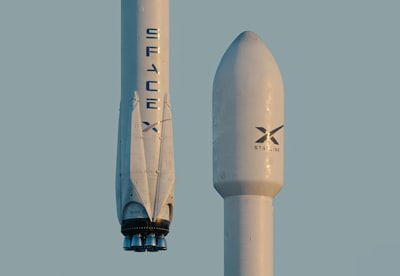
Elon Musk is about to flip the script on the entire aerospace industry. SpaceX, the private rocket company that once seemed like a far-fetched dream, is now reportedly planning a public listing that could value the company at a staggering $1.75 trillion. That’s more than the market caps of most Fortune 500 companies combined. If the numbers hold, Musk could become the first person in history to cross the trillion-dollar threshold — not through Tesla stock appreciation, but through space.
What the IPO Actually Means
Let’s unpack what’s happening here. SpaceX has long been the outlier in the space industry — profitable, innovative, and stubbornly private. Unlike Blue Origin (Jeff Bezos’ space venture), which remains privately held with no clear IPO timeline, SpaceX has been generating serious revenue through commercial satellite launches, NASA contracts, and its ambitious Starlink internet constellation.
The decision to go public isn’t just about raising capital. It’s about legitimacy. A public SpaceX will need to open its books, face shareholder scrutiny, and deliver quarterly earnings. But it also gains access to deeper capital markets and a brand new class of retail investors who have been watching SpaceX from the sidelines for years.
The $1.75 Trillion Question
Here’s where it gets interesting. How do you value a company that has no direct public comparable? Boeing trades at around $150 billion. Lockheed Martin sits at roughly $180 billion. SpaceX at $1.75 trillion would be nearly 10x the entire traditional aerospace industry combined.
But SpaceX isn’t just an aerospace company — it’s an infrastructure play. Starlink already has millions of subscribers globally and is generating cash flow that rivals traditional telecom players. The company has launched over 6,000 satellites and is expanding into cellular coverage, maritime connectivity, and government contracts. If you value Starlink separately, the rocket business becomes almost like a bonus.
Analysts are already doing the math. If SpaceX achieves even modest penetration of the $1 trillion global satellite communications market, revenue could easily double or triple within five years. The IPO pricing will depend on how aggressively Musk and his team want to value the company — and whether institutional buyers will accept a premium that has no historical parallel.
What This Means for Investors
For everyday investors, the SpaceX IPO represents something rare: a chance to own a piece of the most valuable private company in the world. But caution is warranted. At $1.75 trillion, there’s almost no margin for error. Any launch failure, regulatory hurdle, or competitive threat could send the stock into a tailspin.
If you’re thinking about getting in, consider the following:
- Understand the volatility. SpaceX’s stock will likely swing more than traditional aerospace plays. One bad launch could wipe billions in market cap.
- Watch Starlink closely. The satellite internet business is arguably the most valuable part of SpaceX. If Starlink spins off or is valued separately, the math changes dramatically.
- Don’t chase the headline. The $1.75 trillion number is an estimate. The actual IPO pricing could be lower, giving early investors room to grow.
The Broader Implications
This IPO isn’t just about one company. It signals a shift in how we value space-related businesses. For decades, aerospace was considered a mature, slow-growth sector — the domain of defense contractors and government programs. SpaceX has fundamentally changed that narrative.
We’re now entering an era where space is treated like tech. The same venture capital logic that propelled Amazon, Google, and Apple is now being applied to orbital infrastructure. And with SpaceX going public, the next wave of space startups will have a clear benchmark for valuation.
For Musk personally, the IPO could be the final piece of his wealth puzzle. Tesla’s market cap has fluctuated wildly, and much of his wealth is tied to stock options that require complex financial engineering to realize. A public SpaceX, with a stable and liquid stock, could finally unlock the “trillionaire” label — assuming the numbers hold.
The real question isn’t whether SpaceX will be valuable. It’s whether the market is ready to price innovation at this scale. One thing is certain: the SpaceX IPO will be the most-watched public offering in a decade.
If you want to track how this story develops, stay tuned to airdrophunt.site for breaking updates on the SpaceX IPO and what it means for your portfolio.
Sources: BBC News | Hacker News | Futuresearch AI